
If you’ve been researching metal roof costs, you have probably landed on a frustratingly wide range of numbers, with very little explanation of why. So let me give you a straight answer — and more importantly, help you understand what’s actually driving the price so you can make the right decision for your home.

Black 24-gauge standing seam installation in Cambridge, ON — Advanced Metal Roofs
The real price range
For an average home with roughly 2,500 square feet of roof, here’s what you can expect:
That’s a big range. And it’s not arbitrary. Two things drive the price more than anything else: the material and product you choose, and the complexity of your roof.
A low-slope roof with few sections is the most affordable to work with. But if you have a steep roof loaded with dormers, valleys, hips, and ridges, the labour and material costs climb fast. And if you have an existing cedar or slate roof that needs to come off first, that adds cost too.
One thing that surprises a lot of homeowners: labour typically makes up 60–70% of the total cost of a metal roof installation. The materials are only part of the equation. This is exactly why two quotes for the same roof can look very different — you’re largely paying for the contractor’s skill, experience, and how well they follow best practices. A low labour quote often means corners are being cut somewhere.
It’s also worth knowing that re-roofing over your existing shingles is sometimes an option, which can reduce cost by eliminating the tear-off. However, this isn’t always possible or advisable — it depends on the condition of your existing roof and the decking (the plywood that is under your roof). A reputable contractor will assess this before making a recommendation.
Estimate your metal roof cost
Enter your roof size and complexity to get a ballpark range for each roofing style.
What are your metal roofing options?
Not all metal roofs are the same — and this is one of the most important things homeowners get wrong. Here’s a breakdown of your main choices:
By material
Steel is by far the most popular and most affordable option. There are different grades of steel, but for most homeowners the price difference between them isn’t dramatic.
Aluminum is less common and is typically used for metal shingle systems. It costs more than steel.
Copper and zinc are premium, exotic options. They look stunning and will outlast everything else, but they come at a significant price premium.
By style
Exposed fastener panels are the most affordable metal roofing style. The panels are screwed directly through the surface, making them faster to install.
Metal shingles (typically steel or aluminum) sit in the middle of the price range. They mimic the look of traditional roofing materials and perform well — but they come with important limitations (more on that below).
Standing seam is the premium option. Each sheet is custom-cut to the roof and the fasteners are hidden, giving it a clean, modern look.
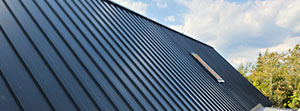
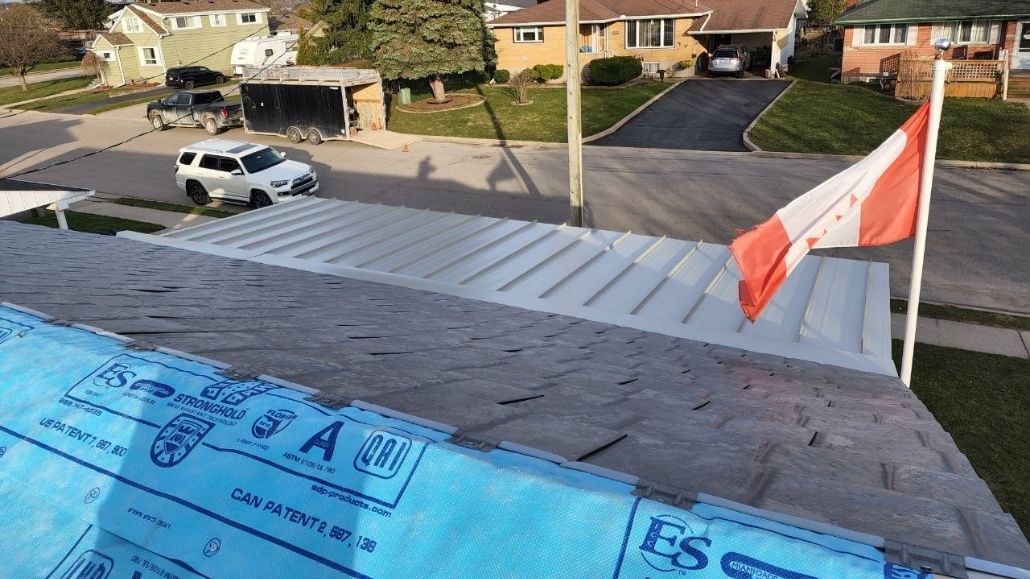
Left: standing seam installation. Right: metal slate shingles — both by Advanced Metal Roofs.
By gauge (thickness)
Gauge refers to the thickness of the steel panel — and counterintuitively, a lower gauge number means thicker metal. The thickness of residential metal roofing ranges from 29 to 24 gauge most of the time, depending on the profile and the product. For most products this isn’t something you’ll actually choose: steel shingles and aluminum shingles come in their own standard thicknesses that are perfectly adequate for any home. Gauge only really becomes a decision when you’re looking at standing seam, where you can opt for heavier 24 gauge steel. It’s more durable and dent-resistant but costs more — worth considering if you’re in an area with heavy hail or want maximum longevity.
By paint system
This one often gets overlooked, but it affects both the price and the long-term appearance of your roof. There are two main paint systems used on metal roofing panels:
SMP (Silicone Modified Polyester) is the more affordable option. It performs well but will fade faster over time, especially in areas with strong sun exposure.
PVDF (often sold under the brand name Kynar®) is the premium paint system. It holds its colour significantly longer, is more resistant to chalking and fading, and typically comes with a longer manufacturer’s warranty. PVDF panels usually cost 30–40% more than SMP panels, but for a roof you’re planning to have for 40–50 years, the colour retention matters.
If longevity and curb appeal over the long haul are priorities, it’s worth asking your contractor which paint system is being used — and getting that warranty in writing.
Is standing seam actually better?
This is a common misconception worth clearing up. Standing seam is not necessarily a better roof than steel shingles — both carry high wind ratings and are quality products. The reason standing seam costs more is almost entirely labour: every sheet has to be custom cut to the roof, which takes significantly more time to install correctly.
What standing seam does offer is unmatched versatility. It can be installed on pitches as low as 0.5/12 all the way up to vertical siding applications. That makes it a viable option for nearly any home, including those with very low-slope roofs where metal shingles simply can’t be used (most shingle systems require a minimum 4/12 slope).

Standing seam installed on a low-slope roof in Waterloo — one of the most versatile applications.
What homeowners get wrong — and what it costs them
After 14 years in this industry, the biggest mistake I see is homeowners assuming all metal roofs are created equal and that every metal roof will automatically last 50+ years. That assumption can be very expensive.
A homeowner gets a quote competitive with asphalt shingle pricing. But the contractor cuts corners: vents aren’t installed or are done improperly, flashings are wrong, and caulking is relied on to keep water out. The result? The roof can’t be repaired — it has to come off entirely and be replaced, costing the homeowner far more than a quality metal roof would have in the first place.
The most common issue with steel shingle installations: improper flashings, with contractors relying on caulking as a substitute. Caulking cracks, shrinks, and fails — and when it does, you have water in your home.
The lesson: a low quote isn’t a deal if the installation is wrong. Know what best practices look like before you hire anyone.
How to vet a metal roofing contractor
Before signing anything, here’s what to ask and look for:
That last one is a serious filter. A professional metal roofing contractor understands that attic ventilation is critical to the long-term performance of any roof system. If a contractor brushes off the ventilation question, that’s a red flag.
The honest truth is that to protect yourself properly, you need to do a bit of homework on metal roofing best practices. A knowledgeable homeowner is a contractor’s best check.
Metal vs. asphalt: the real long-term math
Most homeowners who are seriously considering metal already have a sense that their asphalt roof won’t last more than 15 years — and they’re right. Here’s how the long-term math tends to play out:
If asphalt roofing costs increase even 50% over the next 15 years (a conservative estimate given material and labour inflation), you’ll spend that much again at the 15-year mark. Over 30 years, two asphalt roofs will likely cost you more than one quality metal roof installed today — with the headaches of two tearoffs, two installations, and the uncertainty of pricing you can’t control.
Beyond cost, consider resale value. If you’re planning to sell your home in the next 10–20 years, a metal roof will still be in excellent condition and won’t be a negotiating point for buyers. An aging asphalt roof is often a liability in a real estate transaction. A metal roof can actually add value to your home where asphalt simply maintains the status quo.
Clearing up two common myths
Yes, a bare metal panel in a barn or carport is louder than asphalt. But on a home with a ceiling, insulation, and an airspace between the roof and living area, you won’t notice any difference in sound from inside. Unless you have a window open — then sure, you’ll hear the rain. Most people consider that a feature.
No. Metal roofs do not increase your risk of a lightning strike. Lightning is attracted to height and isolation, not material. A metal roof is actually safer in a lightning strike than other materials because it disperses the energy and is non-combustible.
So should you go metal?
There’s no single right answer — and I’d be skeptical of any contractor who tells you otherwise without asking questions first. The right question is: what’s your pain point?
- If you’re tired of the maintenance cycle and never want to think about your roof again, metal makes a lot of sense.
- If you love the aesthetic of a standing seam or metal shingle roof, that’s a completely valid reason.
- If you’re environmentally conscious and don’t want to send shingles to the landfill every 10–15 years, metal is the clear choice.
- If you’re making a long-term financial decision and want to maximize resale value, run the numbers — they usually favour metal.
But if you’re cash-constrained right now and a quality metal roof isn’t in the budget, a properly installed asphalt roof from a reputable contractor is still a respectable choice. Don’t let anyone pressure you into a cheap metal job just to say you have a metal roof. A bad metal roof is worse than a good asphalt one.
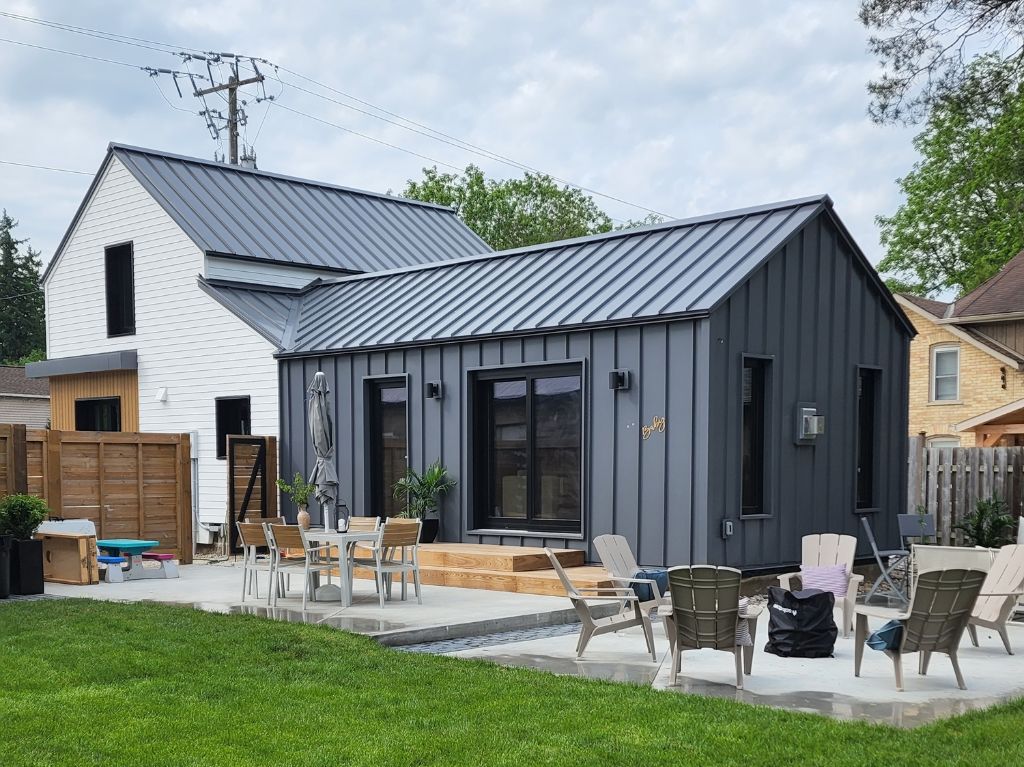
Black standing seam roofing and siding in Guelph, ON — Advanced Metal Roofs.
Have questions about your roof?After 14 years, we’ve seen just about every roof situation imaginable. Contact Advanced Metal Roofs for a free consultation and quote — we serve Kitchener-Waterloo, Cambridge, Guelph, London and surrounding areas.
Leave a Reply
Want to join the discussion?Feel free to contribute!